Barangaroo, Billabongs and Barramundi. I love these words. Names of places like Buklukluk. Towns like Woolloomooloo and Humpty Doo. Animals like wombats and wallaroos. The words roll off the tongue like a nursery rhyme. They are lighthearted. Their round soft edges make me smile. The Aussies generously toss these rhyming rounded-vowel multisyllabic words into their language, but they are clearly not words with Anglo-Saxon roots. They are borrowed from the aboriginal tribes that have lived here for tens of thousands of years. The words, like the people who conjured them, stand apart.
Sacred lands in Kakadu National Park
Australia, like the United States, is a melting pot. The Aussie culture is a curious blend of British conservatism laced with the rebelliousness of the early convicts who were conscripted to work this land. Adventurers and immigrants who flooded to this land of opportunity added their own fierce brand of independence and practicality to the mix. The mixer is still churning. While traveling, we met immigrants from Turkey, Thailand, and Pakistan. We spoke with a resettled university student from Minnesota and a rock ‘n roll singer from China. We met a restaurant owner born in Egypt to Spanish and Italian parents who arrived here by way of Lebanon. Indonesians, Malaysians, and South Americans live here. People from across the globe have all happily assimilated. The original inhabitants, who lived here 60,000 years before Western civilization staked its claim? Not so much.
Sadly, the Aboriginals are the most obviously out of step with modern Australia. The culture clash is far from resolved. The divide is wide and deep. The Aussies may have borrowed words from the Aboriginals, but they have yet to “hear” the real meaning behind the stories they tell.
Making the trek at Cains’ Crossing into Arnhem Land, with the crocodile patrol standing ready
The Northern Territory has the largest population of Aboriginals in Australia. Many live on protected reserves, like Arnhem Land. This huge tract of land lies east of Kakadu National Park, and can only be visited with the permission of the ruling land council. In Darwin, the capital of the Northern Territory, homeless Aboriginals congregate in small groups, nursing their “white man troubles”, looking indigent as well as indigenous. Drugs and alcohol are endemic. I am told that the people living according to their native traditions are both proud and healthy. We didn’t see them. We only saw the urban outcasts lurking on street corners and in public parks. We did meet a few indigenous folks working as rangers, tour guides and retail clerks. They seemed comfortable in their community roles, but still apart.
The Aboriginals are distinguished as much by their features as their color; a rusty deep brown or black tinged with a deep maroon. Their faces are broad, with a heavy brow line, broad fat noses, prominent well-defined jaws, toothy smiles and matted unruly hair. Their black eyes are glassy but piercing. They are lean, with gangly arms and legs and long bony hands that seem to flop off the wrist at odd angles. They are usually barefoot, able to walk on the red-hot cement with ease. They carry the stain of “differentness”, a mark that invariably attracts implicit prejudice. Their appearance is a barrier to their integration into the mainstream; an objective that some clans totally reject, and which others embrace only half-heartedly. Since the white man arrived 300 years ago, they have been enslaved, brutalized and decimated by disease. The historical persecution has left them bruised and wary.
Restitution for the sins of the past is never easy. We’ve seen that in the United States. African Americans and Native Americans have still not fully recovered from abuses suffered at the hands of slave traders and foreign invaders. Racism and inequality still poisons our American culture and it taints Australian too.
The country is struggling to heal the divide created between the Western invaders and the aboriginal landowners. Sadly, money, education and access never guarantee integration, especially if the receiver isn’t ready, able or willing to integrate. Well-intended efforts have dissolved into a blame game of abuses waged by both camps. Neither side is at fault but the complaints are real.
The Aboriginals spend their stipends without regard for white men’s values. They feel entitled, after having been long victimized by those with money and power. They hide behind protectionism, taunting lawmakers. The opposition resents that the native population misuses the olive branches extended to them. The peace offerings are often tossed aside with little appreciation for the necessary sacrifices inherent in presenting them. The working class folks resent the charity bestowed on the indigenous. They see their tax money wasted on excessive and ineffective grants, while they and their children struggle to secure their own futures. It’s a boiling soup pot of resentment, land disputes and differing priorities. The conflict is fueled by a complicated history of relationships between people with vastly different beliefs at odds with one another.
These beautiful words should be taken to heart
The aboriginal way of life is remarkably simple and environmentally friendly. They take only what they need from the land. They lived sustainably for tens of thousands of years, long before it was fashionable to recycle. How then can they really be a part of modern society? How do they respect a society that strives to accumulate things, that eats more than it needs, buys more than it can carry, takes more than it gives back, a culture that has raped the earth to build its hard-edged concrete and steel monuments? How do we appreciate and live in harmony with people who shelter in caves, and paint their legacy on rock wall canvases in the colors of the earth? How do we find common ground with people who forage for their food and live in harmony with the seasons, when we huddle in air-conditioned offices crafting policy that puts corporate interests before public health and climate change?
Aboriginal rock art tells the story of dreaming
The aboriginal belief system begins with the myth of creation. It’s called dreaming. Dreaming! Isn’t that a term that perfectly captures the unknowable mystery of how we all came to be? The creation stories are also called song lines. They are passed down from ancestors who protect tribal history. Some song lines are shared with everyone. Others are secreted away and only revealed to the wisest and oldest of the clan. These dream lines and songs are myths infused with art and magic. They are painted on rocks and tree bark. They are danced. They are sung. They are not linear, but dynamic and poetic. In these indigenous stories, the earth plays a central role as a living breathing being. Animals, rocks and trees are sacred. Sorcerers and shape shifters populate the forest and valleys. Dust is transformed into the Milky Way. Termites become stars. A coiled snake forms a watering hole in the ground. These magical stories are the underpinnings of a belief system that puts earth and her life-giving resources first and on equal footing with human existence. In these stories, we are not better than, but one and the same with the planet that sustains us. It is a belief system that sustained the Aboriginal people for 60,000 years. And it did so without doing harm to our planet.
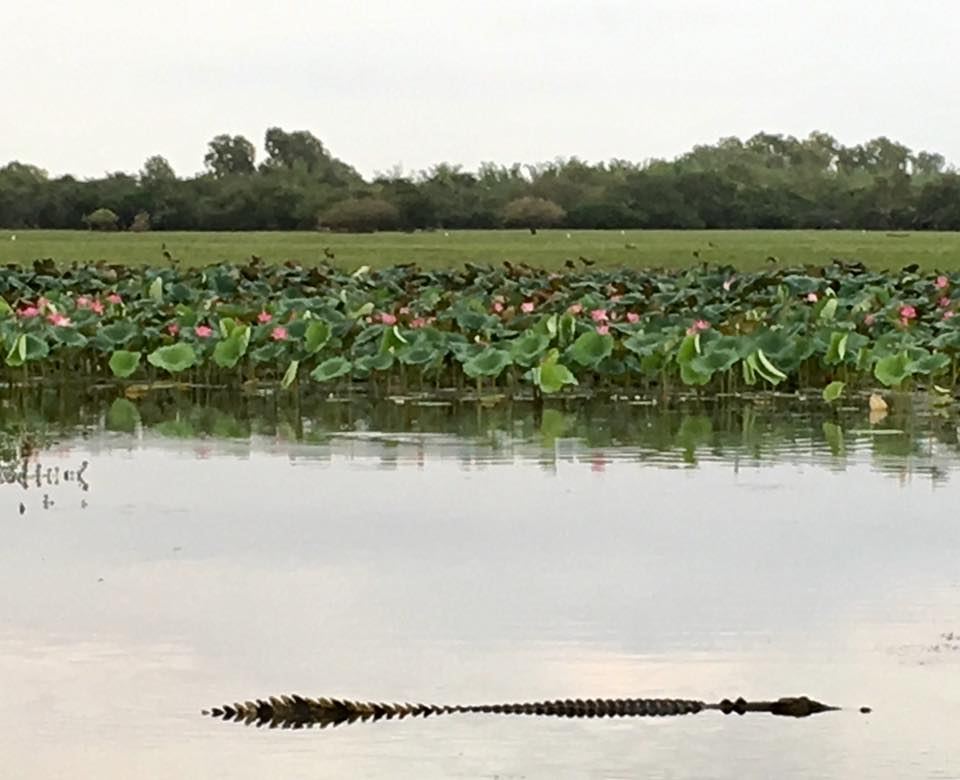
the pristine hunting ground of the aboriginal people
Is it possible to blend the simplicity of traditions that date back tens of thousands of years with an increasingly complex global technocracy? Can we find a common language and truly honor these aboriginal beliefs? It is a question central to preserving the culture of Australia. But it is also a question central to the health of our global environment.
I hope we can find the words to bridge the divide between these worlds. And I hope the words are rounded and soft and can make us smile. The future of our planet may be at stake.